Evo Slim Official Website › Ingredients
Evo Slim Ingredients: All 20 Entries and Their Amounts
Evo Slim has 20 ingredients, and the label prints an amount for every one.
Seven are vitamins and minerals with a Daily Value, led by chromium at 67 mcg (191%) and magnesium at 125 mg. The other 13 are botanical and trace entries from 50 mg down to 3 mg.
To see the panel exactly as printed, open the supplement facts.
Nothing on this page is rounded and nothing is left out. The entries are in the order the panel prints them, which is the order a reader holding the bottle will find them.
How the Evo Slim panel is organised, and why the order matters
Two blocks, and the break between them is the most useful thing on the label.
The first seven entries carry a percent Daily Value. Those are nutrients with an established reference intake, and the percentage tells you how one capsule compares to a day’s worth. The remaining thirteen carry a dagger instead, which is the standard marking for an ingredient with no Daily Value set. That is a statement about the regulatory reference, not about the ingredient.
Reading down the amounts is the fastest way to understand what you are buying. The mineral block runs 125 mg, 50 mg, 8 mg, 1 mg and 67 mcg. The botanical block runs 50 mg, 50 mg, 30 mg, 25 mg, 25 mg, 25 mg, 20 mg, 13 mg, 10 mg, 3 mg, 3 mg and 2 mg. The largest botanical here is the same size as the second-largest mineral, and that tells you where the weight of this formula sits.
Six of the twenty carry most of that weight, and the dosage section on the home page sets each of them against the amount the published work used.
Every Evo Slim ingredient, with its amount and its evidence
Vitamin C (as Ascorbic Acid)
50 mg · 56% Daily ValueFifty milligrams is 56% of the Daily Value, and the NIH fact sheet sets the adult RDA at 90 mg for men and 75 mg for women. Ascorbic acid is the plain form. Half a day from a capsule is a real contribution and not a token one.
Vitamin E (as DL-Alpha Tocopheryl Acetate)
7 mg · 47% Daily ValueSeven milligrams is 47% of the Daily Value. The DL prefix on the label names it as the synthetic form, and the NIH fact sheet on vitamin E explains why that matters: the synthetic form is roughly half as available to the body as the natural one, which the Daily Value calculation already accounts for.
Biotin
300 mcg · 1,000% Daily ValueThree hundred micrograms is 1,000% of the Daily Value, against an adequate intake of 30 mcg in the NIH fact sheet. Biotin has no upper limit, so this is not a safety issue. It is a laboratory one: see the safety page before any blood test.
Magnesium (as Magnesium Oxide)
125 mg · 30% Daily ValueThe largest amount on the panel at 125 mg, 30% of the Daily Value, given as magnesium oxide. Oxide is the cheapest salt and the least well absorbed. A head-to-head trial at 450 mg a day found no effect on arterial stiffness or blood pressure for oxide, citrate or sulfate. MedlinePlus has the dietary picture.
Zinc (as Zinc Oxide)
8 mg · 73% Daily ValueEight milligrams is 73% of the Daily Value, which is a full day for an adult woman and most of one for a man. A 2024 review of zinc in health and disease notes that the body stores very little of it, so regular intake matters more than a large single dose. High zinc taken for months can lower copper, which is the reason not to stack this with a separate zinc supplement.
Manganese (as Manganese AAC)
1 mg · 43% Daily ValueOne milligram is 43% of the Daily Value; the NIH fact sheet puts the adequate intake at 2.3 mg for adult men and 1.8 mg for adult women. The amino acid chelate form named on the label is a common choice for absorption.
Chromium (as Chromium AAC)
67 mcg · 191% Daily ValueSixty-seven micrograms is 191% of the Daily Value, the highest percentage on this panel. The NIH fact sheet sets the adequate intake at 35 mcg for men and 25 mcg for women. The Cochrane review of chromium picolinate pooled nine randomised trials in 622 overweight or obese adults at 200, 400, 500 and 1,000 mcg a day, found a mean difference of 1.1 kg it calls of debatable clinical relevance on low-quality evidence, and found no dose gradient: the larger amounts did no better than the smaller ones. A 2022 meta-analysis looked at glucose and lipids in type 2 diabetes.
Banaba Extract (1% Corosolic Acid) (Lagerstroemia speciosa)(leaf)
25 mg · no Daily Value setTwenty-five milligrams standardised to 1% corosolic acid, so 0.25 mg of the marker compound. This is the only entry whose standardisation is printed, which is the only reason that arithmetic is possible. The review of banaba and corosolic acid describes blood sugar falling within an hour in subjects given pure corosolic acid.
Guggul (Commiphora mukul)(resin)
50 mg · no Daily Value setFifty milligrams of resin, joint-largest botanical here. The serious human work is Szapary 2003 in JAMA, which gave 103 adults 1,000 mg or 2,000 mg of standardised guggulipid three times a day for eight weeks. Grams a day of a standardised extract is a different proposition from 50 mg of raw resin.
Bitter Melon Extract (Momordica charantia L.)(fruit)
20 mg · no Daily Value setTwenty milligrams of fruit extract, with no extract ratio printed. A randomised trial in 24 adults with obesity used 2,000 mg a day for twelve weeks and found no significant change in body weight, though triglycerides and VLDL did fall. That is a hundred times this amount, and the honest reading is that 20 mg is a flavour of the ingredient rather than a dose of it.
Licorice Extract (Glycyrrhiza glabra)(root)
25 mg · no Daily Value setTwenty-five milligrams of root extract. This is the entry with the clearest caution attached: NCCIH describes how glycyrrhizin can raise blood pressure and lower potassium when taken regularly. Twenty-five milligrams a day is small against that literature, which mostly concerns confectionery and tea, but it is the ingredient to name if you take a blood-pressure medicine.
Cinnamon Powder (Cinnamomum zeylanicum)(bark)
50 mg · no Daily Value setFifty milligrams of powdered bark, named by species as Cinnamomum zeylanicum. That is true cinnamon rather than the cassia most kitchen cinnamon is, and it matters because cassia carries coumarin and true cinnamon carries very little. The 2013 meta-analysis pooled trials using 120 mg to 6 g a day; NCCIH is the plain overview.
Gymnema Extract (Gymnema sylvestre)(leaf)
3 mg · no Daily Value setThree milligrams, the smallest botanical amount on the panel alongside white mulberry. A meta-analysis of ten studies in 419 people found improvements in fasting and post-meal glucose against baseline. The review reports no single pooled dose, so no comparison is offered here beyond the obvious one: 3 mg is a very small amount of a leaf.
Yarrow Powder (Achillea millefolium)(flower)
25 mg · no Daily Value setTwenty-five milligrams of flower powder. Yarrow is a culinary and traditional bitter with essentially no modern human trial record for anything on this label, which is worth saying plainly rather than dressing up. It is here as a bitter, and it is safe to treat it as a seasoning rather than an active.
Cayenne Pepper Powder (Capsicum annuum L.)(fruit)(20M HU/G)
10 mg · no Daily Value setTen milligrams, and the only entry carrying a pungency rating: 20M HU/G. A meta-analysis of nine human studies found capsaicin and capsinoids raised energy expenditure by about 245 kJ a day, roughly 59 kcal, and only in participants with a body mass index above 25. Fifty-nine kilocalories is one small apple.
Juniper Extract (Juniperus communis)(berry)
13 mg · no Daily Value setThirteen milligrams of berry extract, no ratio printed. Like the yarrow beside it, juniper is a traditional bitter with a long culinary history and a thin trial record. Anyone who has tasted gin has met it.
White Mulberry Extract (Morus alba)(leaf)
3 mg · no Daily Value setThree milligrams of leaf extract. A meta-analysis of thirteen randomised trials found Morus alba products lowered post-meal glucose at 30, 60 and 90 minutes, with no change in fasting glucose or lipids. Those trials used leaf preparations in a different order of magnitude from 3 mg.
Vanadium (as Vanadyl sulfate)
2 mg · no Daily Value setTwo milligrams as vanadyl sulfate, an ultra-trace element with no Daily Value set. The standard review of vanadium in humans puts the average whole-body load at about 1 mg, which makes 2 mg a day a meaningful addition to a small pool. This is the entry on the panel with the narrowest margin between a trace and a load.
Alpha Lipoic Acid
30 mg · no Daily Value setThirty milligrams, the largest non-mineral entry after the two 50 mg botanicals. A meta-analysis of ten double-blind randomised trials found an average 1.27 kg more weight lost than placebo and a BMI difference of 0.43, and its own regression found no relationship between the dose used and the result.
L-Taurine
25 mg · no Daily Value setTwenty-five milligrams of an amino acid the body already makes in quantity and the diet already supplies. A meta-analysis of twelve studies used 0.5 g to 6 g a day and found effects on blood pressure and lipids but none on body mass index. Twenty-five milligrams is a twentieth of the smallest of those amounts.
What else is in an Evo Slim capsule
Two other ingredients, and the label names both: Hypromellose (vegetable capsule), Rice Flour. Hypromellose is the vegetable capsule shell, so there is no gelatin. Rice flour is the filler that brings a small mass of actives up to a capsule you can handle.
There is no artificial colour named, no sweetener, and no caffeine anywhere on this panel. If a stimulant is what you are avoiding, that absence is worth knowing; if it is what you were hoping for, the cayenne at 10 mg is the only warming ingredient here.
The full printed artwork, including the suggested use and the caution, is reproduced on the label page.
Three things the Evo Slim label does not tell you, stated once
The extract ratios are absent for every botanical except the banaba, which is printed as 1% corosolic acid. Without a ratio, 20 mg of bitter melon extract could represent a wide range of starting material, and there is no way to narrow it from the label.
The capsule shell weight and the total fill weight are not given, so the proportion of rice flour cannot be calculated. And the manufacturing facility is not named, only its country: the label says “Manufactured in the USA with globally sourced ingredients”, which is two separate statements about assembly and about raw material.
None of those three is unusual for this category, and each is the kind of thing a buyer should know before comparing this panel with another one. NCCIH on using dietary supplements wisely is the plain-language guide to that comparison, and this desk’s own checklist scores Evo Slim against it.
Sources cited on this Evo Slim ingredients page
- NIH Office of Dietary Supplements. Vitamin C: Fact Sheet for Health Professionals. https://ods.od.nih.gov/factsheets/VitaminC-HealthProfessional/
- NIH Office of Dietary Supplements. Vitamin E: Fact Sheet for Health Professionals. https://ods.od.nih.gov/factsheets/VitaminE-HealthProfessional/
- NIH Office of Dietary Supplements. Biotin: Fact Sheet for Health Professionals. https://ods.od.nih.gov/factsheets/Biotin-HealthProfessional/
- U.S. National Library of Medicine. Magnesium in diet. MedlinePlus Medical Encyclopedia. https://medlineplus.gov/ency/article/002423.htm
- Schutten JC, Joris PJ, Groendijk I, et al. Effects of Magnesium Citrate, Magnesium Oxide, and Magnesium Sulfate Supplementation on Arterial Stiffness: A Randomized, Double-Blind, Placebo-Controlled Intervention Trial. J Am Heart Assoc. 2022;11(6):e021783. https://pubmed.ncbi.nlm.nih.gov/35253448/
- Stiles LI, Ferrao K, Mehta KJ. Role of zinc in health and disease. Clin Exp Med. 2024;24(1):38. https://pubmed.ncbi.nlm.nih.gov/38367035/
- NIH Office of Dietary Supplements. Manganese: Fact Sheet for Health Professionals. https://ods.od.nih.gov/factsheets/Manganese-HealthProfessional/
- NIH Office of Dietary Supplements. Chromium: Fact Sheet for Health Professionals. https://ods.od.nih.gov/factsheets/Chromium-HealthProfessional/
- Tian H, Guo X, Wang X, et al. Chromium picolinate supplementation for overweight or obese adults. Cochrane Database Syst Rev. 2013;(11):CD010063. https://pubmed.ncbi.nlm.nih.gov/24293292/
- Zhao F, Pan D, Wang N, et al. Effect of Chromium Supplementation on Blood Glucose and Lipid Levels in Patients with Type 2 Diabetes Mellitus: a Systematic Review and Meta-analysis. Biol Trace Elem Res. 2022;200(2):516-525. https://pubmed.ncbi.nlm.nih.gov/33783683/
- Stohs SJ, Miller H, Kaats GR. A review of the efficacy and safety of banaba (Lagerstroemia speciosa L.) and corosolic acid. Phytother Res. 2012;26(3):317-24. https://pubmed.ncbi.nlm.nih.gov/22095937/
- Szapary PO, Wolfe ML, Bloedon LT, et al. Guggulipid for the treatment of hypercholesterolemia: a randomized controlled trial. JAMA. 2003;290(6):765-72. https://pubmed.ncbi.nlm.nih.gov/12915429/
- Cortez-Navarrete M, Mendez-Del Villar M, Martinez-Abundis E, et al. Effect of Momordica charantia Administration on Anthropometric Measures and Metabolic Profile in Patients with Obesity: A Pilot Clinical Trial. J Med Food. 2022;25(6):645-651. https://pubmed.ncbi.nlm.nih.gov/35507955/
- National Center for Complementary and Integrative Health. Licorice Root: What You Need To Know. https://www.nccih.nih.gov/health/licorice-root
- Allen RW, Schwartzman E, Baker WL, Coleman CI, Phung OJ. Cinnamon use in type 2 diabetes: an updated systematic review and meta-analysis. Ann Fam Med. 2013;11(5):452-9. https://pubmed.ncbi.nlm.nih.gov/24019277/
- National Center for Complementary and Integrative Health. Cinnamon: What You Need To Know. https://www.nccih.nih.gov/health/cinnamon
- Devangan S, Varghese B, Johny E, Gurram S, Adela R. The effect of Gymnema sylvestre supplementation on glycemic control in type 2 diabetes patients: A systematic review and meta-analysis. Phytother Res. 2021;35(12):6802-6812. https://pubmed.ncbi.nlm.nih.gov/34467577/
- Zsiboras C, Matics R, Hegyi P, et al. Capsaicin and capsiate could be appropriate agents for treatment of obesity: A meta-analysis of human studies. Crit Rev Food Sci Nutr. 2018;58(9):1419-1427. https://pubmed.ncbi.nlm.nih.gov/28001433/
- Phimarn W, Wichaiyo K, Silpsavikul K, Sungthong B, Saramunee K. A meta-analysis of efficacy of Morus alba Linn. to improve blood glucose and lipid profile. Eur J Nutr. 2017;56(4):1509-1521. https://pubmed.ncbi.nlm.nih.gov/26972284/
- Rehder D. Vanadium. Its role for humans. Met Ions Life Sci. 2013;13:139-69. https://pubmed.ncbi.nlm.nih.gov/24470091/
- Kucukgoncu S, Zhou E, Lucas KB, Tek C. Alpha-lipoic acid (ALA) as a supplementation for weight loss: results from a meta-analysis of randomized controlled trials. Obes Rev. 2017;18(5):594-601. https://pubmed.ncbi.nlm.nih.gov/28295905/
- Guan L, Miao P. The effects of taurine supplementation on obesity, blood pressure and lipid profile: A meta-analysis of randomized controlled trials. Eur J Pharmacol. 2020;885:173533. https://pubmed.ncbi.nlm.nih.gov/32871172/
- National Center for Complementary and Integrative Health. Using Dietary Supplements Wisely. https://www.nccih.nih.gov/health/using-dietary-supplements-wisely
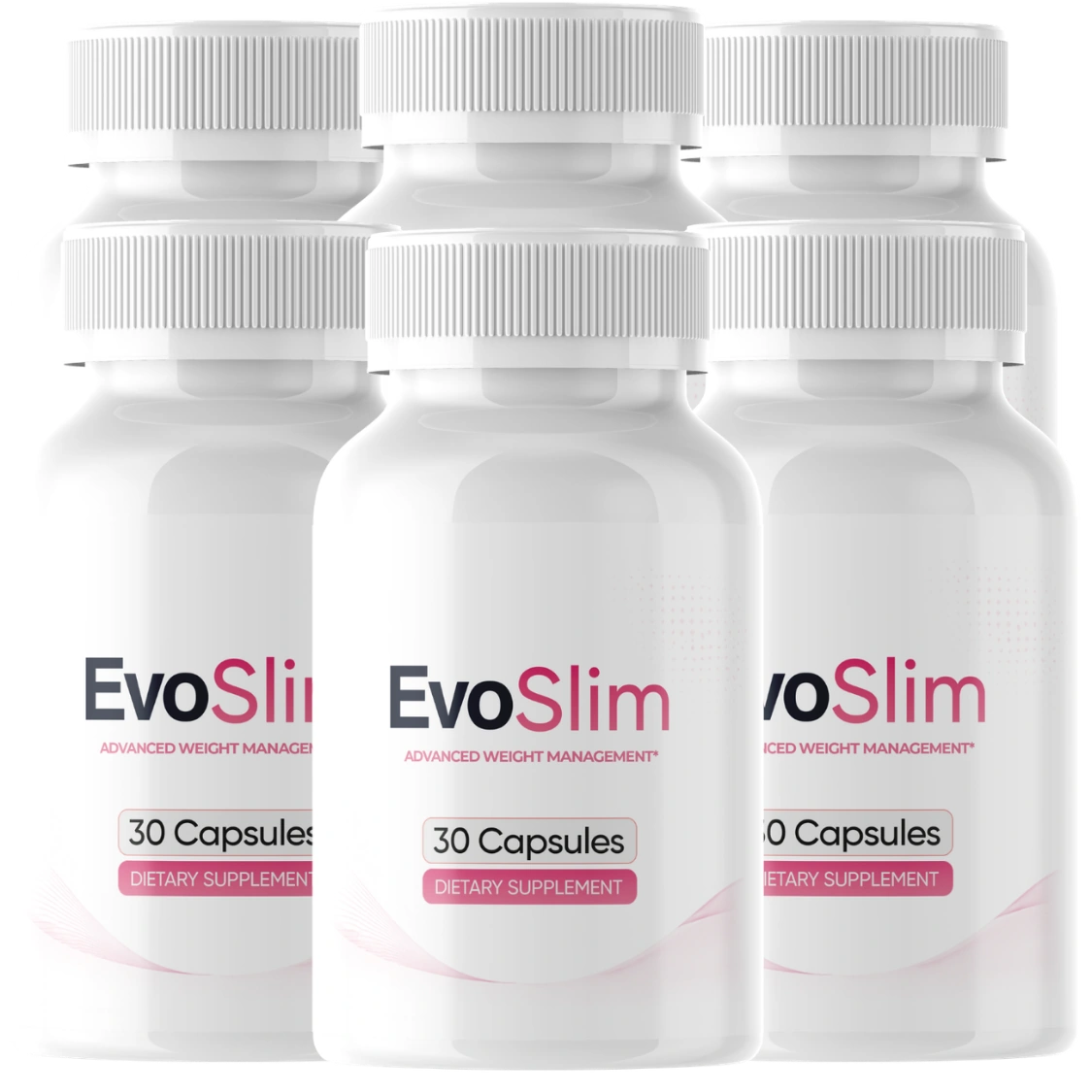
Order Evo Slim with the full panel in front of you
Twenty entries, every amount printed, and sixty days from purchase to change your mind.
$49 to $79 a bottle · 60 days from purchase to change your mind
Order Evo Slim On The Official WebsiteFree US shipping on the 3 and 6 bottle packs · lot EVO-26/EV-2047 · prices read on 19 September 2026