Evo Slim Official Website › Journal › Vanadium At Two Milligrams: The Row Nobody Can Read
Vanadium At Two Milligrams: The Row Nobody Can Read
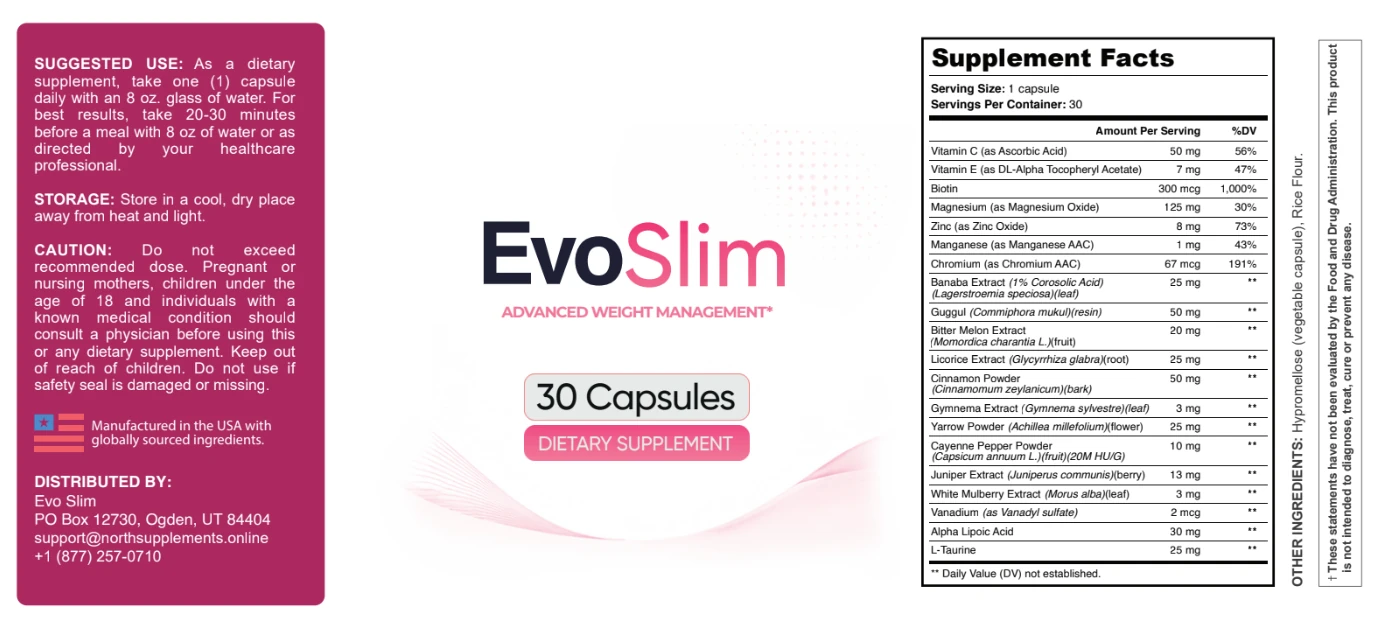
The eighteenth entry on this panel is an element most people have never knowingly taken, with no reference intake, no percentage and a whole-body load of about a milligram. It is the hardest row on the label to judge, and the most interesting.
- Vanadium appears on this panel at 2 mg, as vanadyl sulfate, with a dagger rather than a percentage.
- No Daily Value has been established for vanadium, so there is no reference to compare 2 mg against.
- The standard review puts the average whole-body load of vanadium at about 1 mg.
- Its essentiality in humans is not established, which is unusual for anything on a supplement panel.
- It is the one row on this label a buyer has no conventional way to judge.
The row, and what is missing from it
Vanadium (as Vanadyl sulfate), 2 mg, dagger. It is the eighteenth of twenty entries on this label and it is the one almost nobody reading a supplement panel has an opinion about, because almost nobody has knowingly taken it.
Look at what the row does give you. The element is named. The compound is named, vanadyl sulfate rather than vanadate or metavanadate, and naming the salt is better practice than most labels manage. The amount is printed, 2 mg, with no blend total to guess inside.
Now look at what is missing, and it is more than usual. There is no percentage, because no Daily Value exists. There is no upper limit quoted. And unlike every botanical below it, there is no long culinary history a reader can fall back on for a sense of scale. It is a metal, at a milligram amount, with nothing to compare it to.
What vanadium actually is
Vanadium is a transition metal, the twenty-first most abundant element in the earth’s crust and the second most abundant transition metal in sea water. The standard review of vanadium in humans opens on exactly that point, and it matters more than it sounds.
Because the element is everywhere, it is in food. Mushrooms, shellfish, black pepper, parsley, dill and grain products all carry small amounts, and a typical diet supplies somewhere in the region of ten to thirty micrograms a day. Nobody eats a vanadium-free diet, and nobody has to try.
That ubiquity has an awkward consequence for the science. The review says so directly: the omnipresence of vanadium hampers any attempt to establish whether it is essential, because you cannot easily study a deficiency of something nobody is deficient in. Essentiality in humans has not been established, and that puts vanadium in a different category from every other mineral on this panel.
The chemistry that makes it interesting is structural. Vanadate closely resembles phosphate, and phosphate is involved in a great deal of what a cell does. That resemblance is why vanadium has been studied at all.
Why there is no percentage beside it
A percent Daily Value requires a reference intake, and a reference intake requires a body of evidence about what people need. For vanadium there is no such reference, so the label prints a dagger and the footnote.
Compare that with the entry two rows above it on the same panel. Manganese is also a trace element, also present in an ordinary diet, and also easy to overlook. But the NIH fact sheet on manganese gives an adequate intake of 2.3 mg a day for adult men and 1.8 mg for adult women, so the 1 mg on this label can be printed as 43% and a reader can do something with it.
Vanadium has no equivalent figure, which means the 2 mg row cannot be translated into anything. It is not a fraction of a day’s needs, because no day’s needs have been defined. It is not a multiple of one either. It is simply two milligrams of an element, arriving once a day.
| Element | On this panel | Reference intake | What the label can print |
|---|---|---|---|
| Zinc | 8 mg | 11 mg for men, 8 mg for women | 73% Daily Value |
| Manganese | 1 mg | 2.3 mg for men, 1.8 mg for women | 43% Daily Value |
| Vanadium | 2 mg | None established | A dagger |
What the human record looks like
Thin, and worth describing accurately rather than dismissing.
Vanadium compounds have been studied for their effects on glucose handling, largely because of the phosphate resemblance described above, and most of that work is in animal models. The human work that exists has generally used doses far larger than anything on a supplement panel, has been small, and has reported gastrointestinal effects at the upper end.
What this desk will not do is cite an animal study as though it were evidence about a person, or quote a dose from a clinical setting as though it applied to a 2 mg row in a multi-ingredient capsule. Both are common moves in this category and both are how a trace element ends up sounding like a treatment.
So the honest position is this. Vanadium is a real element with real biochemistry and an unsettled status in human nutrition, and nothing about its presence on this panel at 2 mg is evidence that it does anything for the reason this product is sold. The NIH fact sheet on weight-loss supplements is the right place to see how that standard applies across the whole aisle.
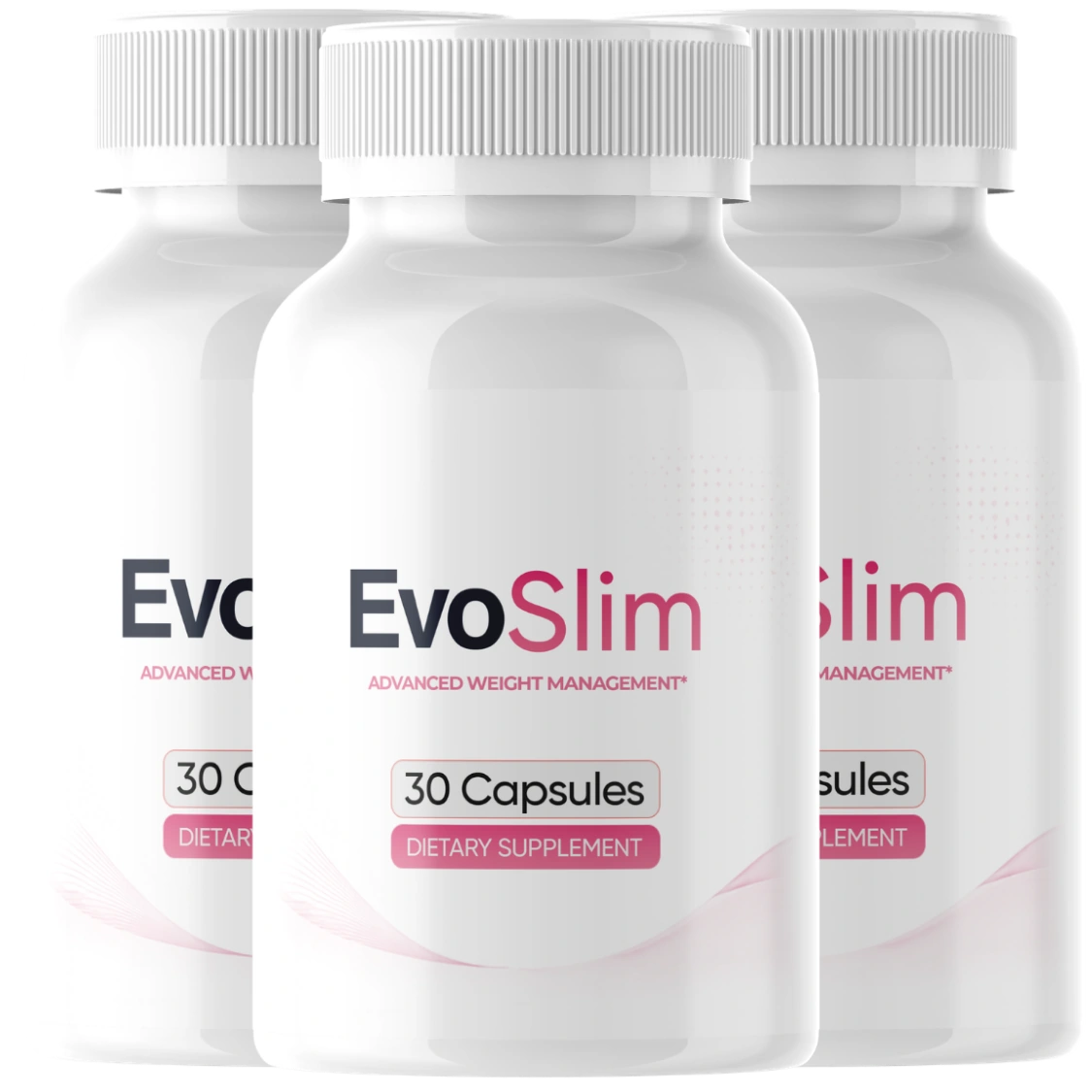
Every Evo Slim amount is printed, including the difficult ones
Twenty entries, twenty figures, and no blend total. The rows you cannot easily judge are at least rows you can see.
$49 to $79 a bottle · 60 days from purchase
Order Evo SlimTwo milligrams against a one-milligram body
Here is the arithmetic that makes this row worth a post.
The review puts the average whole-body load of vanadium in a human individual at about 1 mg. Not 1 mg a day: 1 mg in total, distributed through an entire adult.
This capsule delivers 2 mg a day.
Most of what is swallowed is not absorbed, and vanadium absorption from the gut is generally described as poor, so it would be wrong to read that as doubling a body’s vanadium overnight. But the comparison is still the right one to hold in mind, because it is the opposite of the comparison every other row on this panel invites.
- For the botanicals, the question is whether the amount is large enough to matter. Guggul at 50 mg against three grams in a trial is the shape of that.
- For the minerals with Daily Values, the question is what fraction of a day it supplies. Chromium at 191% and zinc at 73% are the shape of that.
- For vanadium, the question runs the other way: is 2 mg a day a lot, against a pool that small? Nothing on the label helps you answer it.
Why a small number matters more here, not less
The instinct with a 2 mg row is to ignore it. Two milligrams sounds like nothing beside 125 mg of magnesium, and on most panels a small number beside an unfamiliar name is a token gesture. The taurine row on this same label is exactly that.
Vanadium is the one entry where that instinct is unreliable, for three reasons.
- The comparison pool is tiny. Milligrams matter differently against a whole-body load of a milligram than they do against a daily requirement measured in hundreds.
- There is no upper limit on the label to check against. With most nutrients, a reader worried about an amount can look up a tolerable upper intake. Here there is nothing printed to look up.
- It accumulates differently from a botanical. A plant extract is metabolised and cleared. A metal is handled by different machinery, and a six-bottle pack is 180 consecutive days of it.
None of that is an alarm. Vanadium appears on a great many supplement panels at similar amounts and this desk has no adverse reports of its own to publish. It is a reason to read the row deliberately rather than skip it, and a reason it is named on the safety page alongside the three interactions that are worth a conversation.
What this label does tell you about it
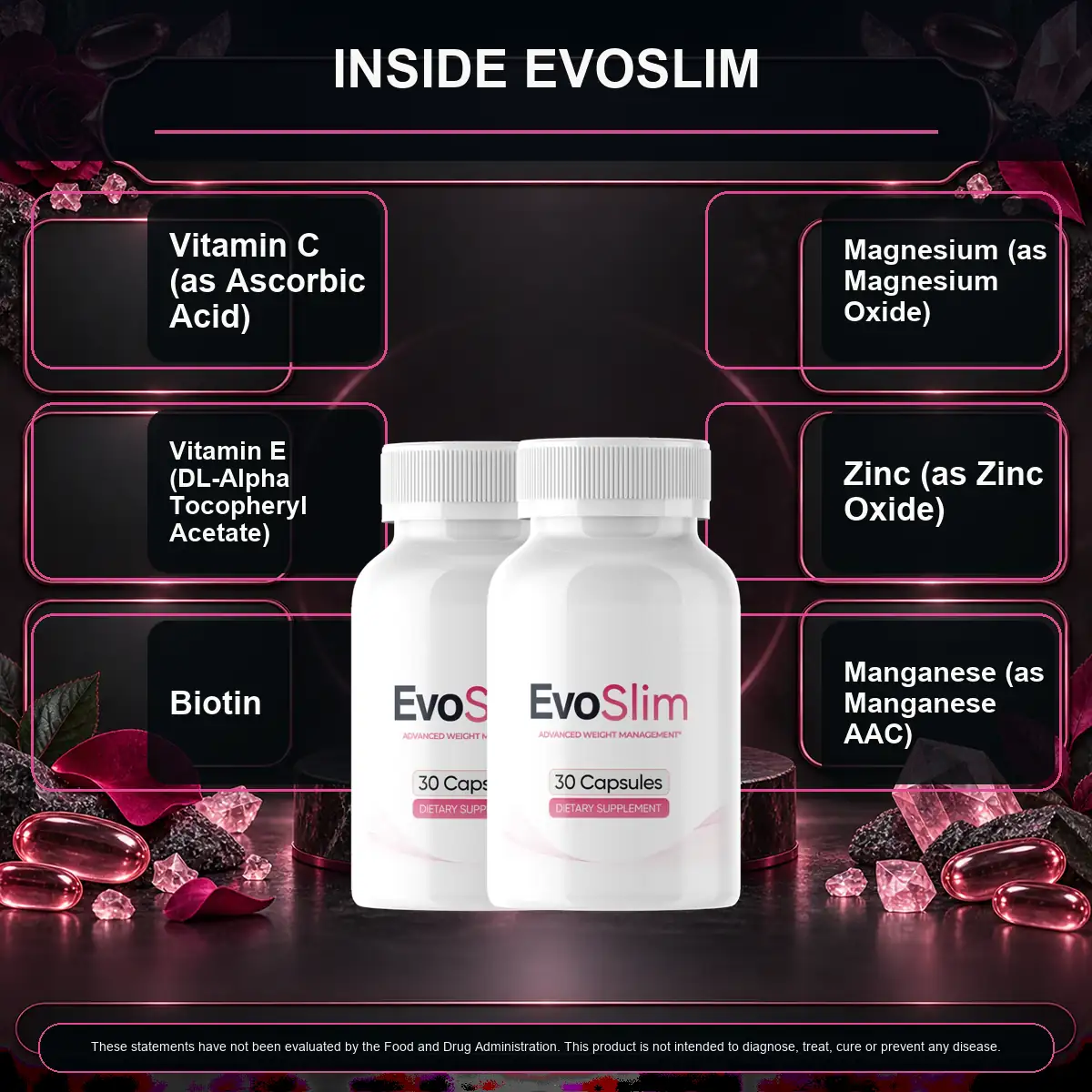
Having spent seven sections on what is missing, it is worth being fair about what is present, because on this particular row the label does better than the category.
- It names the element, rather than burying it in a mineral blend.
- It names the compound, vanadyl sulfate. Vanadium salts differ in how they behave and a label that omits the form has removed your ability to look anything up.
- It prints the amount. Two milligrams, exactly, with no total to divide among unnamed entries.
- It marks the dagger honestly. The alternative, which some labels take, is to print a percentage against a reference that does not exist.
That is four things a reader can act on, from a row about an element with an unsettled nutritional status. It does not make the row a good idea and it does make the label an honest one, which is the distinction the checklist is built around: judge what is disclosed separately from what is formulated.
How to read any ultra-trace row
Vanadium, nickel, boron, silicon, tin and a handful of others turn up on supplement panels with no Daily Value beside them. Four questions cover all of them.
- Is there a reference intake at all? If there is, the dagger is wrong and a percentage should be there. If there is not, the dagger is correct and you are on your own for scale.
- What does an ordinary diet supply? For vanadium it is tens of micrograms. A supplement supplying a hundred times a dietary amount is doing something different from topping up.
- Is the compound named? Element and salt are different questions, and the salt is where absorption and tolerance live.
- How long will you take it? A trace element for thirty days and the same element for a hundred and eighty are different propositions, and the pack ladder on the pricing page decides which one you are buying.
NCCIH on using dietary supplements wisely is the general version of that advice, and the category guide applies it to the five ingredient families that come up most often in this aisle.
The verdict on the eighteenth row
Two milligrams of vanadium as vanadyl sulfate is the least legible entry on this label. There is no reference intake to compare it against, no upper limit printed, no human trial record a supplement page can honestly lean on, and an average whole-body load smaller than one day’s serving.
What the label does is name the element, name the salt, print the amount and mark the dagger correctly. That is a disclosed row rather than a justified one, and the two are not the same thing.
If you want a reason to take this capsule, it is at the top of the panel: chromium at 191% of its Daily Value, zinc at 73%, magnesium at 125 mg. The dosage comparison sets six entries against the amounts the published work used, and the ingredients page carries all twenty with what is known about each. Vanadium is the one where the honest answer is that the label has told you everything it can and it still is not much.
Sources cited in this article
- Rehder D. Vanadium. Its role for humans. Met Ions Life Sci. 2013;13:139-69. https://pubmed.ncbi.nlm.nih.gov/24470091/
- NIH Office of Dietary Supplements. Manganese: Fact Sheet for Health Professionals. https://ods.od.nih.gov/factsheets/Manganese-HealthProfessional/
- NIH Office of Dietary Supplements. Dietary Supplements for Weight Loss: Fact Sheet for Health Professionals. https://ods.od.nih.gov/factsheets/WeightLoss-HealthProfessional/
- National Center for Complementary and Integrative Health. Using Dietary Supplements Wisely. https://www.nccih.nih.gov/health/using-dietary-supplements-wisely